Setting up a blog takes an afternoon. Picking a hosting provider, registering a domain, and installing a theme wraps up before dinner. The real work starts with the decisions that shape whether anyone reads your blog in the first place: what it stands for, who it serves, what it looks like, and why someone should come back.
How to start a lifestyle blog that lasts, builds an audience, earns trust, and eventually generates income starts there. This guide covers the positioning, the design, the content architecture, and the growth plan that separates blogs people love from blogs people forget.
Decide What Your Blog Actually Stands For
A lifestyle blog becomes a brand when it serves a specific reader with a clear point of view.
Most guides on how to start a lifestyle blog treat niche selection as a content-sorting exercise: pick a topic like wellness, travel, or home décor, and start writing. That approach produces a blog that sounds like every other blog in the category. The better starting point is serving a reader with a recurring problem and a clear reason why you're the one to help solve it.
How to Start a Lifestyle Blog: Find the Problem First
Copyblogger reduces the entire blog strategy question to a single test: help someone with a problem you are good at solving. What problems can you solve for your readers? What questions can you answer? What topics can you provide the most unique insight on?
The Copyblogger example makes the point concrete. "Dog trainer" is a topic. "Dog trainer for older dogs" is a positioning statement because it targets a distinct reader with an identifiable problem. Apply the same logic to lifestyle: "wellness blogger" is a topic category. "Burnout recovery for people who can't afford to slow down" is a brand position that attracts a specific reader already searching for help.
Build an Editorial Mission Statement
An editorial mission statement turns a personal blog into a brand asset.
The mechanism that converts a personal blog into a brand asset is what the CMI calls an editorial mission statement. It defines your unique perspective on your subject area, the value your content delivers, and the specific audience you serve. Every future content decision gets filtered through it.
The Ghost niche gives you a useful way to think beyond topic selection. Your niche spans six dimensions: topic, format, language, audience, voice, and location/platform. Successful niche creators use all six intentionally. The positioning opportunity sits at the overlap of your experience, your skills, your interests, and your customer's needs. As Ghost puts it: "Successful niches don't happen by accident... Niches are forged, not found."
This specificity has a commercial logic, too. Topics based on pain points drive conversions because they attract visitors already seeking a solution, visitors in buying mode.
Build a Blog Experience That Reflects Your Brand
Readers judge your blog's design before they read your words, so your visual identity has to earn attention fast.
A peer-reviewed study by Lindgaard et al. (2006), published in Behaviour & Information Technology, found that users form reliable visual impressions of a website in 50 ms before they've read a single word. Your typography, color palette, photography style, and layout clarity are being judged before your headline has a chance to perform. The consequences are measurable: blogs carry an average bounce rate near 65%, significantly higher than e-commerce or B2B properties.
Move Past Theme-Picking
Theme choice matters less than the brand decisions your design communicates.
Most lifestyle blog guides treat design as a theme-selection step: browse a marketplace, pick something clean, move on. That produces a blog that looks like every other blog using the same theme. Your visual identity is a set of brand decisions. The typeface communicates tone, the color palette triggers emotional associations, and the imagery style signals whether you're aspirational, approachable, playful, or authoritative.
This is where vibe coding changes the equation for solo creators. With Lovable, an AI app builder for developers and non-developers, you can describe the look and feel you want, your brand colors, your layout preferences, and the mood of your site, and get a fully custom blog built in an afternoon. Visual Edits: Direct UI manipulation that lets you click and modify interface elements in real-time without writing prompts. You can change fonts, adjust spacing, swap images, and tweak colors directly, with no code or credits consumed. We built Visual Edits so you can iterate on design decisions as fast as you can think of them.
If you want a head start, browse templates for a production-ready foundation you can customize until every element matches your brand. If you want more control, you can extend the generated codebase directly. Every Lovable project exports clean React code you can customize. Developers can also use Chat Mode: Interactive collaborative interface for planning, debugging, and iterative development with multi-step reasoning capabilities. You can use it to shape logic, plan integrations, and refine the build while keeping code ownership. You can also connect through GitHub integration for bi-directional code synchronization and extend APIs directly when you want more control. The result is a blog that looks like you hired a designer, built in the time it takes to pick a WP theme.
Design Decisions That Affect Reader Behavior
Load speed is one of the clearest design choices affecting whether readers stay or leave.
Load speed is the most measurable design decision you'll make. NNGroup cites Google research showing that 53% of mobile visits are abandoned if a page takes longer than 3 seconds to load, and a 0.5-second delay produced a 20% higher bounce rate in Google's own SERP experiments. Heavy themes, unoptimized hero images, and auto-playing video are measurable audience-killers.
Plan Content Before You Write It
A content plan gives your blog consistency, depth, and a better chance of surviving the first year.
Publishing without a plan leads to inconsistency, and inconsistency kills readership before it forms. Orbit Media found that bloggers publishing 2,000+ word posts report strong results at nearly double the rate of the overall benchmark: 39% versus 21%. Depth and consistency outperform volume every time.
Set Three Content Pillars
Content pillars keep your posts connected instead of feeling random.
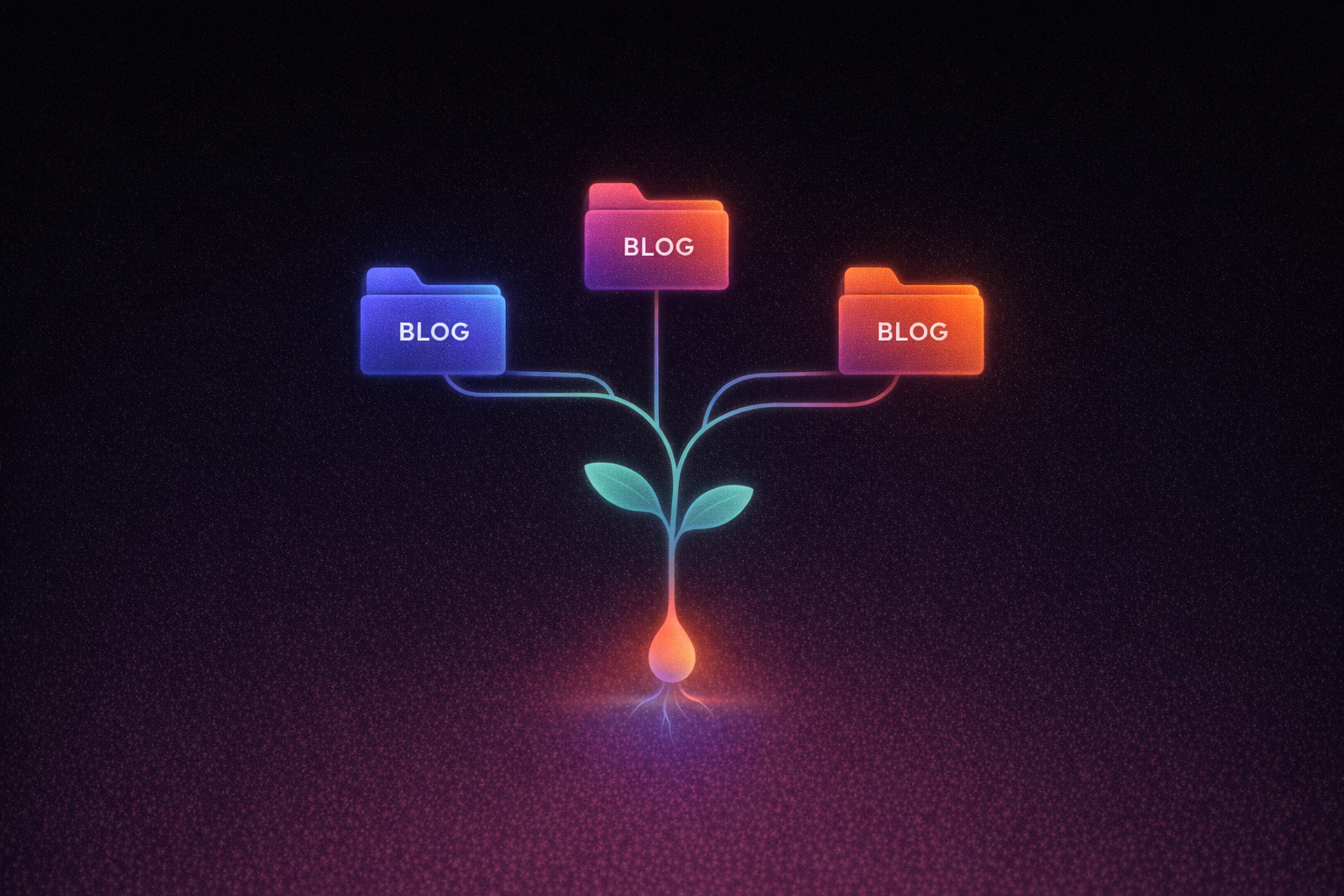
Content pillars are the broad themes that organize everything you publish. Buffer uses a useful analogy: pillars are the trunk of a tree with the potential for many branches of conversation, questions, and analysis. Individual posts are branches; the pillar gives them coherent identity.
Ghost guide and Buffer both point to three pillars as a strong starting point. Ghost recommends 2–3 related subjects, Buffer suggests 3–5, and their overlap at three makes it a practical sweet spot. Each pillar should tie directly to a reader outcome. A burnout-recovery blog might use "daily energy management," "boundary-setting at work," and "weekend reset rituals" as its three pillars.
Build a Simple Editorial Calendar
A simple calendar beats an elaborate system you won't maintain.
A Google Sheets spreadsheet is enough to start. Ghost calendar frames it as knowing what to publish and when. The goal is knowing what you'll publish next week before this week's post goes live.
Understand Evergreen vs. Timely Content
Evergreen posts build long-term traffic, while timely posts peak fast and fade fast.
Evergreen content compounds. Copyblogger flywheel describes a flywheel effect: higher returns over time, even years after publication. A Backlinko study of 3.6 billion articles found list posts and how-to guides are the formats most likely to stay evergreen, consistently earning shares and links 30 or more days after publication. Timely content works differently: CMI research shows news-style articles deliver 80% of their lifetime value in the first week.
Ahrefs mix recommends a content mix of 40% evergreen, 40% seasonal, and 20% experimental. For a new lifestyle blog, lean heavily toward evergreen. Those posts keep compounding traffic while you build your library.
Grow Your Audience Before You Have One
Early growth comes from choosing a few channels on purpose and showing up consistently.
Spreading effort across every social platform, every SEO tactic, and every growth hack simultaneously is the fastest way to burn out before month three. Three channels matter most for early-stage lifestyle blogs.
SEO: Start with Long-Tail Keywords
Long-tail keywords give a new blog its best chance to rank for terms real readers actually search.
New blogs have no domain authority, which makes competing for broad keywords unrealistic. Long-tail keywords, longer and more specific queries with lower search volume, are the entry point for a new site. "How to meal prep for one person on a budget" will rank faster than "meal prep tips" and attract a reader closer to taking action.
Target three to five keyword phrases per post, ensuring all share the same searcher intent, as Moz recommends. Place your primary keyword in the intro paragraph, an H2 subheading, the URL slug, and the page title. Then build internal links between related posts using descriptive anchor text. For a new blog, internal linking is one of the few ranking levers you control entirely.
Social: Pick One Platform and Go Deep
One strong social channel usually beats five neglected ones.
Buffer advises starting with one social platform rather than distributing effort thinly across many. Hootsuite recommends defining your target reader by demographics, interests, and behaviors, then matching those to platform demographics.
Build repurposing into your workflow from the start. Buffer recommends creating at least five smaller social posts from every long-form blog post. One blog post becomes a carousel, a quote graphic, a short video, a poll, and a story, all driving back to the original.
Email: Build the List from Day One
An email list gives you direct audience access you control yourself.
Email list ownership is a strong predictor of blog survival. Creator Spotlight found that creators who own their audience through email are 2.7x more likely to earn $31,000 or more annually than fully platform-dependent creators. Start collecting email addresses the day your blog goes live.
Keep opt-in forms short: email address and optionally first name, with a clear headline and call to action. Mailchimp reports that consumers are most likely to opt in after browsing (50%), so embed forms within posts, in sidebars, and on dedicated landing pages. Offer a content upgrade, a post-specific checklist, template, or short resource, that gives readers a reason to subscribe beyond "get my newsletter."
Turn Readers Into Revenue
The strongest monetization strategy is one you plan for early, then support with content and design.
Per the editorial-planning logic behind the CMI statement, content businesses take time to mature, so your revenue model should shape your blog's design and content architecture from day one, even if the income itself arrives later.
Affiliate Links
Affiliate revenue depends more on reader trust than on aggressive placement.
Bloggers embed trackable links to products and earn a commission when readers purchase. Awin data, one of the world's largest affiliate networks, reports that conversion rates of 0.5%–1% are considered average across industries. Niche-authority publishers who've built genuine trust can reach 4–8% conversion rates, per wecantrack research. That gap is earned through consistent editorial quality and a design that signals credibility, not through more aggressive placement.
Brand Sponsorships
Engagement often matters more than raw audience size when sponsors decide what to pay.
Brands pay a flat fee per post or use performance-based structures, and engagement rate, not follower count, is the primary pricing driver. CreatorIQ data found that creators can earn between $0.59 and $0.95 per engagement depending on follower tier. A smaller audience with high engagement can command rates comparable to a larger, less engaged one.
Digital Products
Digital products create the most direct path from expertise to revenue.
E-books, templates, courses, and workshops represent the highest-margin path because there's no brand intermediary. This is where your blog's design and email capture system directly affect revenue. Forrester Research found that a well-designed, frictionless UX can raise conversions by up to 400%.
This is where Lovable earns its place again. You can build a landing page for your digital product, an email capture flow, or a members-only content section, all matching your blog's brand identity, using Agent Mode: Autonomous AI development with independent codebase exploration, proactive debugging, real-time web search, and automated problem-solving. Describe what you need, and it handles the build. We designed Agent Mode to handle full execution so you stay focused on strategy, not build work. Need to accept payments? Stripe integration is built in. The result is a revenue system that feels native to your blog, not patched together from five different services.
Your First Post Launches More Than You Think
The first posts on your blog establish the identity readers will remember and return to.
The technical setup for how to start a lifestyle blog is the easiest part of the entire process. What you've built by following this guide is something much harder to replicate: a brand with a defined point of view, a design that earns attention in 50 milliseconds, a content plan that compounds over time, and a growth strategy focused on the three channels that actually move the needle early.
Your first post launches a positioning statement. Your second post reinforces it. By your tenth post, readers start recognizing your voice, your visual identity, and the specific value you deliver. That recognition is what turns casual visitors into subscribers, and subscribers into customers.
Most lifestyle bloggers are still waiting on the right WordPress theme three months after deciding to launch. You can describe what you want, explore templates, and have a blog live today, one that actually looks like your brand, not a starter theme everyone else is using. Build the email capture page that converts, the about page that earns trust, and the content hub that keeps readers coming back. Start building without writing a line of code.
FAQ
How do lifestyle blogs make money?
Lifestyle blogs typically make money through affiliate links, brand sponsorships, digital products, and email-driven offers. The strongest setup connects monetization to the same audience problem the blog already helps solve.
How often should you post on a new lifestyle blog?
Consistency matters more than raw volume. A simple editorial calendar and a few strong content pillars make it easier to publish on a schedule you can actually maintain.
Should a lifestyle blog focus on SEO or social media first?
Most new blogs benefit from both, with effort focused selectively. Long-tail SEO helps readers discover you over time, while one focused social platform helps you build early attention without spreading yourself too thin.
Do you need an email list right away?
Yes. The article's evidence points to email ownership as one of the strongest advantages a new creator can build from day one, especially when the blog also plans to sell products or services later.
Can you build a custom lifestyle blog without code?
Yes. The article explains that you can use Lovable to shape the design, customize the experience, and build supporting pages like email capture flows or product landing pages without writing code, while still extending the codebase if you want more control later.
What should your first few posts cover?
Start with posts that fit your content pillars and solve a clear reader problem. That gives your blog a recognizable point of view early, instead of looking like a collection of unrelated topics.
What's the fastest way to get started?
Define your audience, choose your core pillars, plan your first posts, and get the site live with a design that matches your brand. If you want a faster head start, Lovable's templates can help you launch with a production-ready foundation you can customize quickly.
How can Lovable help after the blog launches?
Once your blog is live, Lovable can help you build the pages and tools that support growth and revenue: email capture pages, digital product landing pages, and members-only content sections. That gives you a blog and the systems around it in one branded experience rather than a patchwork of separate tools.
Ready to build the blog around your brand, not a generic theme?
A lifestyle blog usually needs more than a homepage. You may want an email capture page for subscribers, a product landing page for templates or guides, and a content hub that keeps readers moving through your best posts. Building those pieces the traditional way can take weeks of design revisions, theme compromises, and plugin workarounds. With Lovable, you can build them faster, keep the design consistent, and shape the experience around your audience from day one. Start building today.